GOING HOME
Penangnites are really
lucky.....to be a part of and to enjoy their renaissance. It was lovely roaming
the streets with the old buildings still intact (albeit they will need
renovating at some point) and the friendly folks persuading tourists to
participate in this living heritage. Old buildings turned into restaurants
abound. Our family home during the 1940s-50s at 18 Krian Road is one such restaurant.

Googling for information for this post, I found
that I'd missed quite a bit of Penang. Am so looking forward to another trip
to this tiny piece of paradise.

By the way, Penang has succeeded where Singapore is still trying.....bringing your own carriers. I was pleasantly surprised to find even the department stores don't provide carriers.

By the way, Penang has succeeded where Singapore is still trying.....bringing your own carriers. I was pleasantly surprised to find even the department stores don't provide carriers.
Way to go Penang!
preserving memories,
promoting heritage
Little Children on a Bicycle@ Lebuh Armenian
Street Drawings by Lithuanian artist
Ernest Zacharevic, 25, who first visited Penang in 2009 after graduating from
London’s Middlesex University. Intrigued by Malaysia, he moved there in 2011
and began depicting its people and culture, mainly on canvas and paper. He also
opened an art center for children in one of George Town’s old colonial streets.
Little Children on a Bicycle@ Lebuh Armenian
 |

This is painted on the side door of a shophouse. It shows a boy hanging out on his morcycle as he watches pedestrian traffic passing along the street. This mural Boy on a Bike along Ah Quee Street. is immediately to the right of another Zacharevic piece, fading dinosaur head is just about visible, Little Boy with Pet Dinosaur
 |
Reaching Up@Lebuh Canon
a simple blog helping to locate the art works

In 2010,
the government launched a contest that called for creatives to brand the city
with their designs in an effort to promote George Town’s status as a Unesco
World Heritage site. The winning entry, from Kuala Lumpur firm Sculpture At
Work, installed over 200 caricature sculptures across the city’s walls,
pavements and phone booths, including a two-dimensional tribute to Penang
native son Jimmy Choo, the shoe designer.
Not sure what this sculpture is about. Unfortunately didn't have the time to do the Art Trail.


In the 19th Century, poor Chinese migrant families from Fujian Province, SE Coast of China, left for a better life in Penang. Families with the same surname would cluster their homes near each other. The houses were built on an ad hoc basis and the jetty was initially rows of planks supported by stilts and was a platform for passengers from boats. Some of the planks still in use were the original ones from the 19th Century.
The Chew Jetty is still home to hundreds of people living in this area
today but many have changed their social and economic lifestyles.
The jetty houses may look old and depleted but surprisingly very clean and tidy inside. Water and electricity were installed for them in 1954. There are grocery stores and most houses have modern amenities. There was one double story, beautifully tiled dwelling.
The jetty houses may look old and depleted but surprisingly very clean and tidy inside. Water and electricity were installed for them in 1954. There are grocery stores and most houses have modern amenities. There was one double story, beautifully tiled dwelling.

Drawing on the side of one building was done by Ernest Zacharevic.
List of Clan Jetties at Weld Quay:
Chew Jetty,Lee Jetty,Lim Jetty,Tan Jetty,Yeoh Jetty,Chap Seo Keo (Mixed Clans Jetty), Peng Aun Jetty (already demolished) and Koay Jetty (already demolished)
Chew Jetty,Lee Jetty,Lim Jetty,Tan Jetty,Yeoh Jetty,Chap Seo Keo (Mixed Clans Jetty), Peng Aun Jetty (already demolished) and Koay Jetty (already demolished)
Incidentally, my maternal grandmother was a Chew.
NB: Information googled, photos mine
chiak ka seow(eat like mad!)
so little time, so much to eat!!
so little time, so much to eat!!
Day 1 : @ jalan kuching kopi tiam, off Burmah Road, near Georgetown City Hotel.
Started with Curry Mee and Kopi Si Peng (Iced Coffee with Evaporated Milk)
 |
| Curry Mee |
This was followed by a few pieces of ROTI BABI.
 |
| Roti Babi |
This popular snack is bread stuffed with a mixture of minced pork and
crab meat (the more premium ones) dipped in egg, fried and eaten with Lea and Perrins
Worchestershire Sauce and sliced red chilis. This particular version was dipped
in panko crumbs which remained crispy many hours later.
Then it was off to Pulau Tikus Market for
 |
| Chee Cheong Fun |
CHEE CHEONG FUN, steamed rice rolls with lip smacking red sweet sauce, hae ko (prawn paste) and chili. Recipe can be found inhttp://en.petitchef.com/recipes/main-dish/penang-chee-cheong-fun-steamed-rice-rolls-with-shrimp-paste-fid-1498411
 | |||||
| Apom Balek |
and APOM BALEK. While googling, it was strange to see apom balek and ban chang kueh used inter changeably. Apom balek is supposed to be eaten plain or with sliced bananas. The Indians do their appam in a mini wok pan so it looks like an egg. From memory, mum used to make apom in this shape with bananas.
This vendor's apom was a very thin crepe with full bodied coconut milk. Very tasty.
Recipe by Amy Beh : http://kuali.com/recipes/view.
 |
| Left:Roti Babi Top: Perut Ikan Right:Kai Keok |
PERUT IKAN LEMAK: sold by the lady in Pulau Tikus Market, is a tamarind based vegetable curry made with various herbs, dried prawns and pickled fish stomach.

The Perut Ikan Lady and her many home cooked Penang dishes including Hong Bak, Curry Capitan, Ju Hu Char, Kerabu Beehoon, Hay Ya Kay (chincalok pork) etc.
 |
| Sambal Balitong |
 |
| Fried Fish Achar |
 |
| Nasi Ulam |

Day 2 : BREAKFAST @ jalan kuching again.
 |
| Hokkien Mee |
First course HOKKIEN MEE, a noodle soup made of prawn and pork rib stock garnished with sliced pork, egg, fish cake and a heady sambal of chili, onion and garlic. This was followed by a most forgettable popiah.
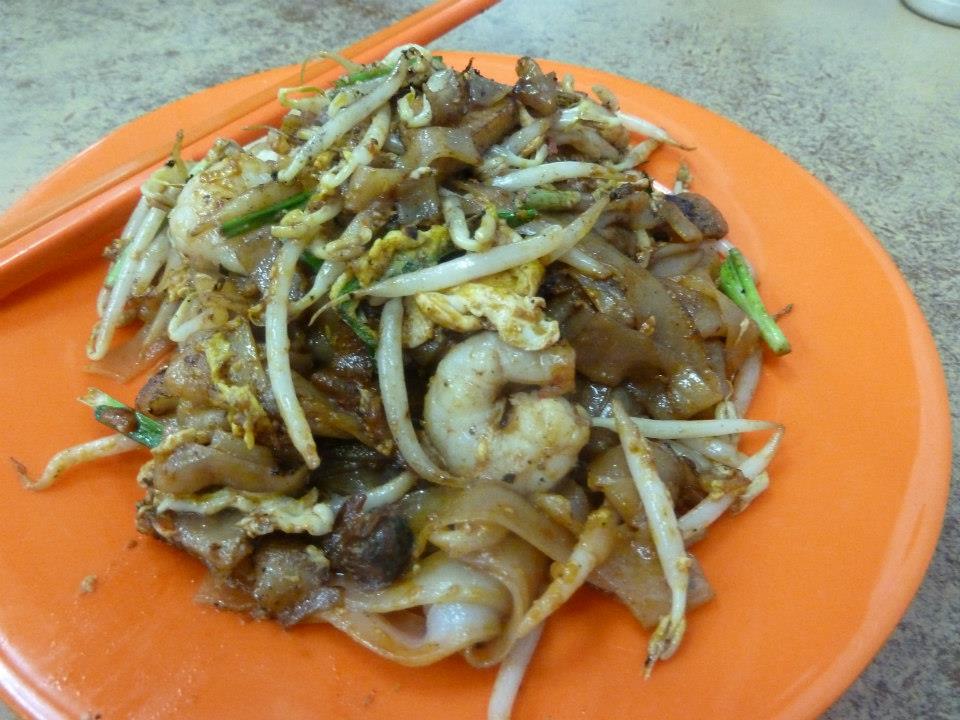 | |
| Char Kueh Teow |
Walking once again to Pulau Tikus market, I couldn't resist the BAN CHANG KUEH. The vendor made me a bak hu (pork floss) Ban Chang Kueh (a bit too heavy I fancy) and a regular peanut and sugar one which I preferred. I like the way these vendors convert their vans to "kitchens"
  |
| Ban Chang Kueh |
 |
| Top:Perut Ikan Left:Nasi Ulam Right: Hay Ya Kay |
and what else did i eat??

 |
| Chun Piah @Sea Pearl Lagoon Cafe Tanjong Tokong |
 |
| Chendol @Midlands Building |
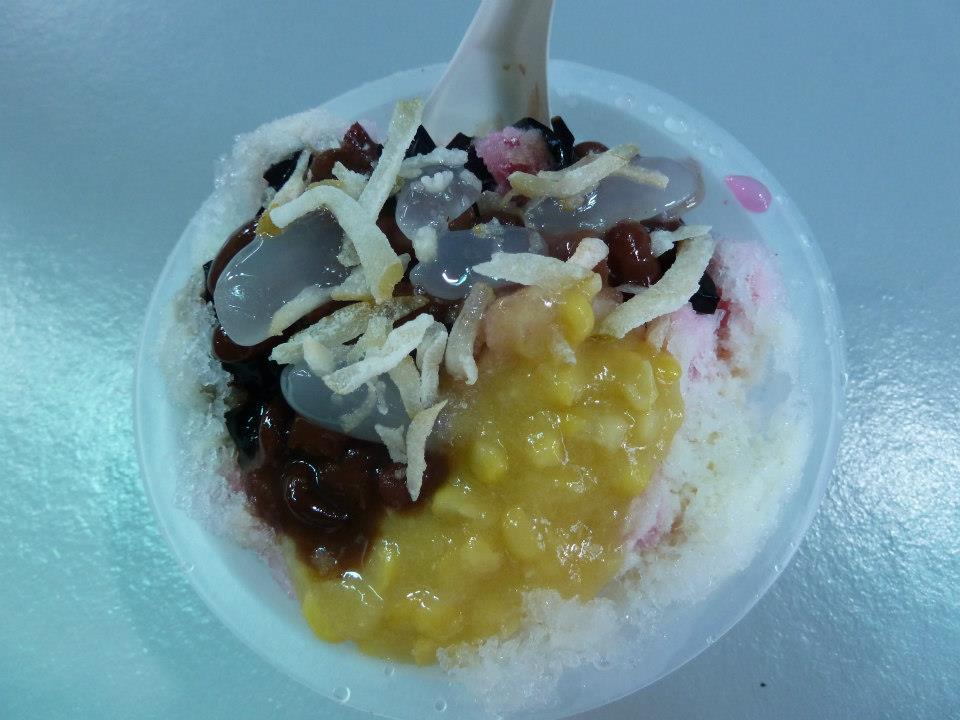 |
| Ice Kachang @ Midlands Building |
 |
| Assam Laksa @ Northam Beach Cafe |
Can't wait for my next trip. Missed some of my favourites this time round. Except for the satay photo from gourmetgarden.com, the rest of the photos come from the RasaMalaysia blog
 |
| Popiah from Padang Brown |
 |
| Ju Hu Eng Chye |
 |
| Pasembur (indian) |
 |
| Loh Bak |
 | |
| Pork Satay |
CHINCALOK PORK (Hay Ya Kay)
Ingredients:
Ingredients:
*300gms pork belly, thinly sliced and seasoned with 1dssp cornflour, 1dssp sugar and 0.5 tsp salt.
*3 Red and 3 Green Chilis, thinly sliced
*8 shallots and 4 garlic cloves, thinly sliced
*2-3 tbsp chincalok (depends on saltiness of chincalok)
*4-5 tbsp water and3 tbsp of oil
Method:
1. Heat 3tbsp of oil, fry sliced shallots and garlic till fragrant and brown. Add red and green chilis. Remove and drain.2. Use residual oil and stir fry the seasoned pork till well cooked and shiny. Remove.
 |
| photo:thelittleteochew.com |
4. Plate and garnish with remaining fried shallot mixture.
some notes:
*cincalok is fermented/fermenting shrimp so needs careful handling. When you open the bottle for the first time, make sure you have NOT shaken the bottle. Open the cap slowly, over the sink, so the cincalok doesn't explode. Once opened keep in the fridge. Wipe spillage immediately. Cincalok smells worse than the sewer but tantalizes the tastebuds when properly cooked. Extremely more...ish!
*use judiciously as the salt content is extremely high
ROTI BABI
 | |
| cekur root:photo soshiok.com |
*Spice Paste:Blend 1inch cekur ginger root (omit if not available), 15 shallots, 5 cloves garlic. Add 3dssp coriander powder, 0.5 tsp white pepper powder.
*Mince 1 large white onion and 6 garlic cloves.
*Season 500gms minced pork or chicken breast (doesn't taste as nice) with 1 dssp cornflour, 2dssp Lea and Perrins Worchester Sauce, 1 dssp sugar, 1 tsp salt and 150gms prepared crabmeat (optional).
*1 tbsp of mashed tau cheo, 4 eggs, 1 big sandwich loaf (unsliced) or if not available regular sliced bread and 100mls oil.
Method:
1. Fry spice paste in 20 mls oil till fragrant. Add tau cheo. Fry 1 minute, add minced white onion and garlic. Stir another minute, add minced meat and fry till cooked. Sprinkle a little water if meat mixture gets dry. If crabmeat is used, add just before removing from the stove to cool the mixture.
2. If unsliced bread is available, cut 1inch slices. Split each slice and stuff with cooled meat mixture. If using regular bread, sandwich the filling between two slices.
3. Beat eggs, dip bread in egg mixture and shallow fry over medium heat till brown. Remove and drain. Cut into bite size pieces. Serve with Lea and Perrins Worchestershire Sauce and sliced red chilis.
nb: using a panko dip (crush if panko is too large). After dipping in egg wash, dip in panko and shallow fry. Drain.
Ingredients
2 Tbs oil for sautéing
Spice Paste:
2 Tbs coriander seeds
5g chekur ginger root
1 tsp white peppercorns
15 shallots
3-5 cloves garlic
1 tsp tau cheo (preserved soy bean)
½ tsp nutmeg
Filling:
6-10 garlic, minced
500g onions, diced
500g minced chicken
Seasonings:
2 Tbs sugar
1 tsp salt
1 big sandwich loaf, unsliced
2-4 eggs, lightly beaten
250ml oil for deep frying
Spice Paste:
2 Tbs coriander seeds
5g chekur ginger root
1 tsp white peppercorns
15 shallots
3-5 cloves garlic
1 tsp tau cheo (preserved soy bean)
½ tsp nutmeg
Filling:
6-10 garlic, minced
500g onions, diced
500g minced chicken
Seasonings:
2 Tbs sugar
1 tsp salt
1 big sandwich loaf, unsliced
2-4 eggs, lightly beaten
250ml oil for deep frying
Serves...
4
A delicious afternoon snack
The chicken does not take on as much flavour as pork would in the dish and it could be a bit dryMethod
Heat 2 Tbs oil in a wok over medium flame to sauté the spice paste.
Stir in the minced garlic and diced onion, and fry to mix well. Add in the minced meat and stir fry until cooked.
Season to taste with sugar and salt. Slice the bread 5cm thick. Slice off the crust and make a slit in the bread to form a pocket.
Stuff the cooked filling into the slit and seal with some of the beaten egg.
Dip sandwich in beaten egg before deep-frying in medium hot oil until golden and crispy.
Drain on paper towels. To serve slice diagonally and enjoy.
Stir in the minced garlic and diced onion, and fry to mix well. Add in the minced meat and stir fry until cooked.
Season to taste with sugar and salt. Slice the bread 5cm thick. Slice off the crust and make a slit in the bread to form a pocket.
Stuff the cooked filling into the slit and seal with some of the beaten egg.
Dip sandwich in beaten egg before deep-frying in medium hot oil until golden and crispy.
Drain on paper towels. To serve slice diagonally and enjoy.